Launch week
I launched Yogakosh with no ad budget. Product Hunt, LinkedIn, and friends and family, all on the same day.
24 upvotes. 30 installs that week. A week later, 5 people were still practicing.
That last number was the only one that meant anything, and it wasn't really about the app. None of my friends practice yoga. They installed it to support me, not because they needed a hip flow before work.
Friends can give you a launch day. They can't give you users.
Product Hunt had its own lesson. I asked friends to upvote. The ones who created an account that day couldn't — new accounts get filtered out. I couldn't see who had voted, either. And Product Hunt asks makers not to request votes at all, which I found out afterwards.
Next time I'll ask for feedback instead. Feedback you can act on.
Reddit
Reddit has yoga communities full of people practicing at home. Reaching them was another matter. These aren't places you can show up and post in. You earn your way in, and the price is weeks.
Every subreddit has its own rules. The one with the most potential users doesn't allow anything that looks like promotion. Not a link, not a mention. Get it wrong and you can be banned from the community, or from Reddit altogether. Some subreddits won't let you post until your app has enough downloads or reviews. Which is hard when you're trying to get your first ones. So I read the rules and stayed quiet.
You also can't just show up and post. Most communities require karma first, which you earn by being useful. Commenting on other people's posts. Giving honest feedback on other founders' apps. Showing up for weeks before asking for anything. No amount of AI will help here. Believe me, I tried.
When I finally posted in r/iOSapps, my images didn't upload. I tried to post it again and found out I couldn't for another 30 days.
After 30 days, I tried once more. The few people I reached gave me the most useful feedback I've had.
Two of them asked the same question: why do I need to sign in? One put it this way:
"Requiring Sign in with Apple would put me off. If there's no history of personalization, why not let people start a flow without an account and only ask them to sign in when it's actually needed?"
The other request was hands free controls, so you can pause or skip a pose without reaching for your phone. For an app built around not looking at the screen, it's a fair ask and on my list.
I still can't reach most of my users on Reddit. But the few I reached changed the product more than launch day did.
Why I removed sign in
The question stayed with me, because they were right.
Yogakosh doesn't personalize anything based on your data. Sign in existed for one reason. Every new user gets three free credits for premium flows, and without an account, deleting and reinstalling the app would reset them.
Then I asked who that was really protecting me from. Someone reinstalling an app over and over to avoid paying was never going to pay. I was making everyone sign in to stop a few people who were never going to be customers.
So on Android there's no sign in at all. Open the app, start a flow. Purchases still restore, because that's handled by the Play Store, which knows who bought what. The app never sees an identity. iOS gets the same change next.
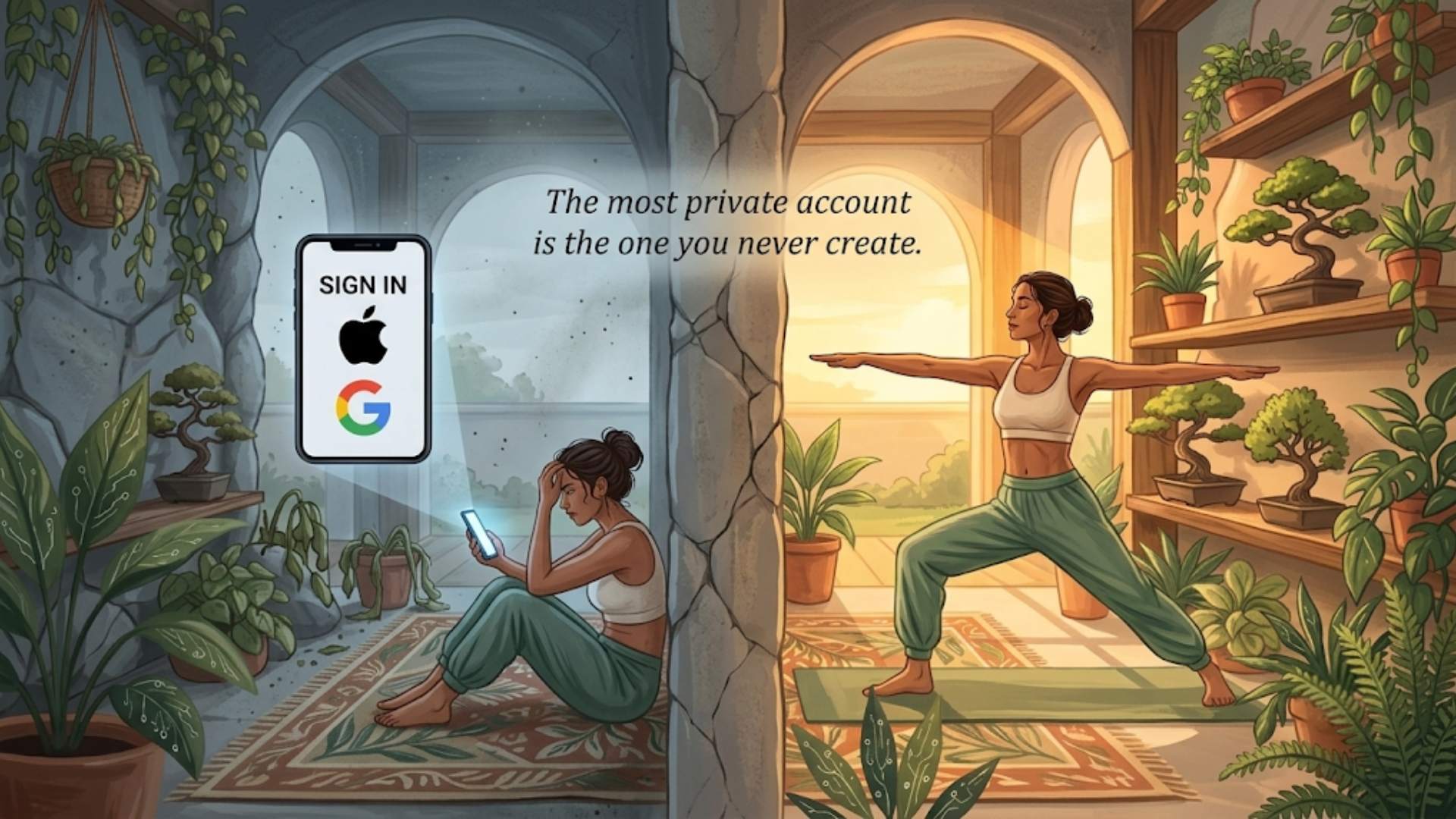
Privacy was always part of Yogakosh. On iOS, that meant Sign in with Apple. Now it means no account at all.
The most private account is the one you never create.
Indie Hackers
Same rule as Reddit. You earn the right to post by participating first.
The most useful thing I found there wasn't feedback on my app. It was other founders writing about pricing by country — purchasing power parity. $9.99 a month is small in some places and a real expense in others.
So I did it. 30 markets, grouped into tiers. In the lowest tier a subscription costs about a third of the US price. I did it by hand. Every country, every price, twice: once in App Store Connect, once in Google Play Console.
It's now live on both stores.
One thing I'm watching. The audio guidance is only in English. A fairer price removes one barrier, not the other. In places where following English by ear isn't easy, a lower price may bring installs that don't stick.
What's next
Yogakosh is now on Android.
It's the version shaped by everything above. No sign in. Prices that fit where you live.
The plan from here is still no paid ads. On Reddit, that means showing up first and mentioning the app only when it fits.
The number I care about isn't downloads. It's how many people who install actually start a flow. A download is a person who was curious for four seconds. A first flow is a person who unrolled a mat. Sign in sat between those two moments and asked for something before giving anything. Removing it should move that number. If it doesn't, the account was never the problem.
I still haven't reached most of the people Yogakosh is for. But I know more about where they are, and what they need, than I did on launch day.
If you practice at home, I'd love to hear what you think. If you're building something on your own, I'm happy to answer questions.